Composting is a simple way to turn everyday food scraps and yard waste into a rich soil amendment. Instead of sending certain organic materials to the trash, you can recycle them at home and use the finished compost to support gardens, flower beds, containers, and houseplants.
Starting a compost pile does not require a large yard or expensive equipment. With the right location, a basic container, and a balance of materials, beginners can build a composting routine that is easy to maintain.
What Is Composting?
Composting is the natural process of breaking down organic materials into a dark, crumbly material often called finished compost. Microorganisms, insects, and other small organisms help transform items such as leaves, fruit peels, and grass clippings.
Finished compost can improve soil structure, help soil hold moisture, and add organic matter. It is not a replacement for all soil or plant food, but it is a useful addition to many gardening projects.
Choose the Right Composting Method
The best composting method depends on your space, the amount of organic waste you produce, and how much time you want to spend maintaining the pile.
Outdoor Compost Bin
An outdoor bin is a good choice if you have a yard. You can buy a ready-made compost bin or build a simple enclosure from untreated wood, wire mesh, or other suitable materials.
Place the bin on bare soil when possible. This allows helpful organisms, worms, and insects to enter the pile. Choose a location with some shade or partial sunlight, good airflow, and convenient access from the kitchen and garden.
Compost Tumbler
A compost tumbler is a sealed container that rotates. Turning the tumbler can be easier than using a traditional pile, and the design may help keep the compost area tidy.
Tumblers usually work best when filled with a balanced mixture of materials. Avoid packing them too tightly, because airflow is important for decomposition.
Indoor Worm Composting
Worm composting, also called vermicomposting, uses certain types of worms to break down food scraps. A worm bin can work well in an apartment, basement, garage, or other sheltered location.
This method requires more specific care than a basic outdoor pile. Worms need suitable bedding, moisture, food, and a comfortable temperature. It is a useful option for people without outdoor space.
Learn the Two Main Material Groups
A healthy compost pile needs a mix of “green” and “brown” materials. These names describe the role materials play in the pile rather than their actual color.
Green Materials
Green materials are generally moist and rich in nitrogen. Common examples include:
– Fruit and vegetable scraps
– Coffee grounds and paper filters
– Fresh grass clippings
– Young weeds without seeds
– Fresh plant trimmings
– Small amounts of plain food leftovers
Brown Materials
Brown materials are usually dry and rich in carbon. Examples include:
– Dry leaves
– Untreated paper and cardboard
– Small twigs
– Straw
– Shredded paper
– Plain paper napkins
– Dried plant stems
A compost pile made mostly of green materials may become wet and smell unpleasant. A pile made mostly of brown materials may break down very slowly. Add both types regularly to help maintain balance.
Start With a Simple Layering Plan
You do not need to measure every ingredient. A simple approach is to add a layer of brown material, followed by a smaller layer of green material. Cover fresh food scraps with brown material to reduce odors and discourage pests.
Keep a bag or container of dry leaves, shredded cardboard, or plain paper near your compost bin. This makes it easy to add brown materials whenever you add kitchen scraps.
Cut large items into smaller pieces before adding them. Smaller pieces have more exposed surface area, which helps them break down faster.
Keep the Pile Moist but Not Soaked
Moisture helps microorganisms do their work, but excessive water can fill the air spaces in the pile and lead to poor airflow. The compost should feel similar to a wrung-out sponge.
If the pile is too dry, add a small amount of water and mix the materials. You can also add fresh grass clippings or fruit and vegetable scraps. If the pile is too wet, add dry leaves, shredded cardboard, or plain paper and turn the pile to improve airflow.
A covered bin can help protect the compost from heavy rain while still allowing some air to circulate.
Provide Air by Turning the Compost
Compost organisms need oxygen. Without enough airflow, the pile may become compacted and develop a strong odor.
Use a garden fork, shovel, or compost aerator to turn the materials every week or two. Move material from the outside toward the center and loosen any clumps. If turning the pile is difficult, add coarse materials such as small twigs or dry stems to create air pockets.
You do not have to turn the compost constantly. Occasional mixing is usually enough for a beginner-friendly system.
Know What to Compost
Many common household and yard materials can go into a home compost pile, including:
– Fruit and vegetable scraps
– Coffee grounds
– Tea leaves without plastic components
– Eggshells
– Dry leaves
– Grass clippings
– Untreated wood chips
– Plain cardboard
– Uncoated paper
– Small plant trimmings
Check packaging before composting paper products. Avoid materials with heavy coatings, glossy finishes, or large amounts of ink when you are unsure of their suitability.
Materials to Leave Out
Some materials can attract pests, create odors, spread plant diseases, or break down too slowly in a basic home system. Beginners should generally leave out:
– Meat, fish, and bones
– Dairy products
– Greasy or oily foods
– Pet waste
– Diseased plants
– Weeds carrying mature seeds
– Coal or charcoal ash
– Treated or painted wood
– Large branches
– Glossy paper and plastic-coated materials
Some advanced composting systems can handle materials that a basic pile cannot. If you are uncertain, check the instructions for your composting method or contact your local waste and recycling program.
Manage Odors and Pests
A well-balanced compost pile should have an earthy smell. Bad odors often mean the pile is too wet, too compacted, or overloaded with green materials.
To correct the problem:
- Add a generous layer of dry brown material.
- Turn the pile to improve airflow.
- Remove large clumps of food scraps.
- Cover fresh scraps with leaves or shredded cardboard.
- Check that the bin has enough ventilation.
Avoid adding meat, dairy, oily foods, or pet waste to reduce the chance of attracting unwanted animals. A secure lid can also help, especially in areas where wildlife is common.
Be Patient With the Process
Composting does not happen overnight. Depending on the materials, weather, moisture, airflow, and how often the pile is turned, compost may take several months to finish.
Finished compost is usually dark brown, loose, and crumbly. It should have an earthy smell, and most of the original materials should no longer be recognizable. A few small twigs or eggshell pieces may remain and can be screened out or left to break down further.
Do not worry if your first batch is imperfect. Composting improves with observation and small adjustments.
How to Use Finished Compost
Add finished compost to garden beds before planting, mix a small amount into potting soil, or spread it around established plants as a mulch. Avoid placing a thick layer directly against plant stems.
Use compost as one part of a broader soil care routine. Combining it with suitable soil, water, sunlight, and plant care practices will help your garden make the most of its benefits.
Make Composting a Daily Habit
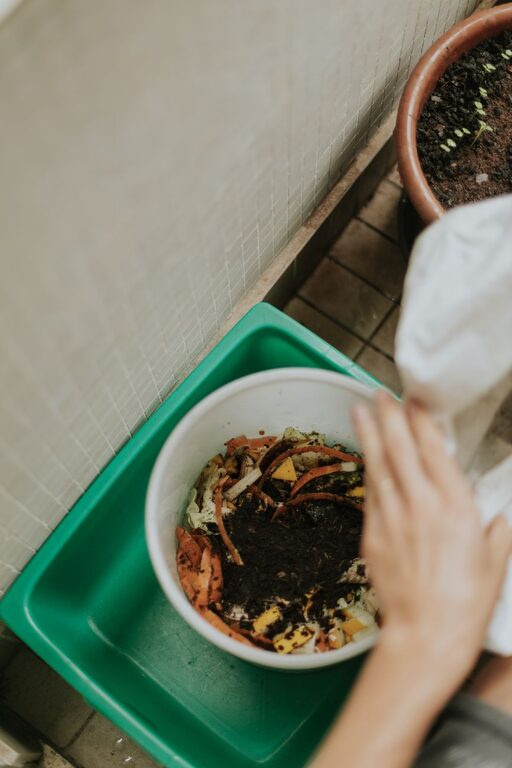
The easiest way to stay consistent is to keep a small, washable container near your kitchen workspace. Empty it into the outdoor bin or worm bin regularly so scraps do not sit indoors for too long.
Begin with a manageable routine: collect suitable scraps, add brown material, check moisture, and turn the pile occasionally. With a little practice, composting can become a straightforward household habit that reduces waste and creates a useful resource for your plants.