
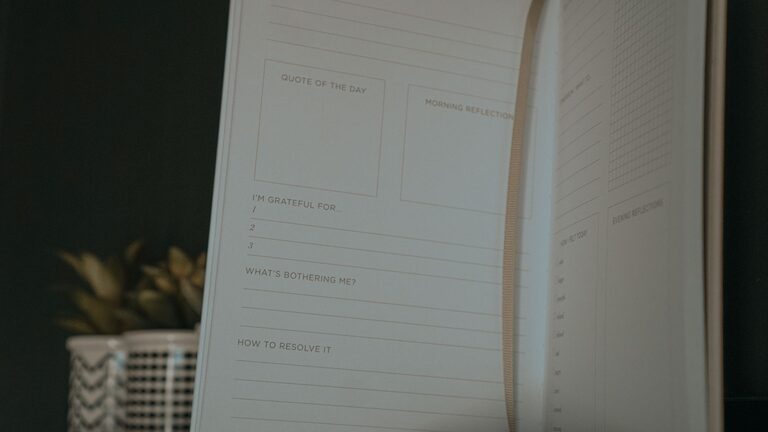
Starting a gratitude journal can be a simple way to pause, notice positive moments, and reflect on what matters to you. You do not need special writing skills, a perfect notebook, or a large amount of free time. A few thoughtful lines, written regularly, can be enough.
The key is to create a practice that feels natural and enjoyable. This guide explains how to choose your journal, decide what to write, build a routine, and keep going when your motivation changes.
What Is a Gratitude Journal?
A gratitude journal is a notebook or digital document where you regularly record things you appreciate. These entries can focus on large events, such as reaching an important goal, or small details, such as a warm drink, a helpful message, or a quiet morning.
Gratitude journaling is not about pretending that everything is perfect. It is a chance to notice positive experiences while still making room for ordinary or difficult feelings. Your entries can be honest, personal, and brief.
Choose a Format That Fits Your Life
The best journal is one you will actually use. Before you begin, choose a format that feels convenient.
Paper journal
A paper notebook can make the practice feel intentional. You can choose a simple notebook, a planner, or a dedicated journal with prompts. Consider keeping it near your bed, desk, or another place you visit often.
Digital journal
A notes app, document, or journaling app can be useful if you prefer typing. Digital entries are easy to search and can be updated from different devices. You may also use a password-protected app if privacy is important to you.
Voice notes
If writing feels difficult, try recording a short voice note. Describe what you appreciated that day in a few sentences. This option can work well during a commute, a walk, or a busy evening, as long as you can record safely and privately.
Decide How Often to Write
There is no single correct schedule. Some people write every day, while others prefer a few times each week. Start with a routine that feels realistic.
You might choose to write:
– Every morning
– Before bed
– During a lunch break
– Once or twice each week
– Whenever you need a quiet moment
Writing every day can help you build consistency, but it is not required. A regular practice that fits your schedule is more useful than an ambitious plan that becomes stressful.
If you are unsure where to begin, try writing three times a week for two weeks. After that, decide whether you want to write more often, less often, or at the same pace.
Start With Simple Prompts
When you open a blank page, it can be difficult to know what to write. Prompts give you a starting point and can help you look at familiar experiences in new ways.
Try answering one of these questions:
– What made me smile today?
– Who helped me recently?
– What is one small comfort I enjoyed?
– What part of today felt peaceful?
– What skill or ability am I thankful to have?
– What place makes me feel comfortable?
– What did I learn today?
– What is something in my home that I appreciate?
– What challenge helped me grow?
– What am I looking forward to?
You do not need to answer several prompts in one sitting. Choose one question and write whatever comes to mind.
Make Entries Specific
Specific details can make gratitude entries more meaningful. Instead of writing, “I am grateful for my family,” describe the moment that made you appreciate them.
For example:
– “I appreciated my sister checking in after a busy day.”
– “I am grateful for the neighbor who brought in my package.”
– “I enjoyed hearing birds outside while I made breakfast.”
Details help you remember why something mattered. They also make it easier to return to older entries and reconnect with the feeling behind them.
Keep Your Entries Short
A gratitude journal does not need to become a long writing project. A few sentences or even a short list can be enough.
You could use this simple structure:
- Write one thing you appreciate.
- Add a specific detail.
- Explain why it mattered to you.
For example: “I am grateful for my afternoon walk. The cool air and quiet streets helped me clear my mind before finishing work.”
If you have more time, you can write a longer reflection. On busy days, a single sentence is still a valid entry.
Connect Gratitude to an Existing Habit
Attaching journaling to a routine you already follow can make it easier to remember. This approach is sometimes called habit stacking, but the idea is simple: place your new activity next to something you already do.
You might write:
– After brushing your teeth
– After making your morning coffee
– Before turning off your bedroom light
– After planning your day
– During a regular weekly review
Keep your journal and pen nearby, or place a note on your phone as a reminder. The fewer steps required, the easier it will be to begin.
Avoid Repeating the Same List Without Reflection
Repeating familiar answers is normal, especially when you are starting. However, you may find the practice more engaging when you explore why something matters.
Instead of listing “my home” several times, consider different details:
– The quiet place where you read
– The comfortable chair you use after work
– The light that enters through the window
– The people who help maintain your home
You can also return to the same subject from different perspectives. A friend, a hobby, or a daily routine may offer new reasons for appreciation.
Be Honest About Difficult Days
A gratitude journal should not pressure you to ignore frustration, sadness, or disappointment. On difficult days, look for something small and genuine rather than forcing a cheerful answer.
You might write:
– “Today was tiring, but I appreciated having a quiet meal.”
– “I felt disappointed, and I am grateful that I gave myself time to rest.”
– “The day did not go as planned, but one person listened to me.”
You can also combine gratitude with a realistic reflection. This keeps the journal balanced and personal. The goal is not to create a perfect record of positive thoughts. It is to notice what is meaningful, even when the day is complicated.
Review Your Entries
Every few weeks, read some of your previous entries. A review can help you notice patterns and remember moments that might otherwise fade.
As you read, ask yourself:
– What topics appear most often?
– Which people or activities bring me energy?
– What small comforts do I tend to overlook?
– Have my priorities changed?
– What would I like to make more time for?
You may discover that simple experiences, such as time outdoors, conversations, music, or creative activities, are especially important to you. These observations can help you make thoughtful choices about your time.
Common Mistakes to Avoid
A few expectations can make gratitude journaling harder than it needs to be.
Avoid:
– Treating missed days as failure
– Comparing your entries with someone else’s
– Writing what you think you should appreciate
– Forcing yourself to feel happy
– Making the practice longer than your schedule allows
– Buying complicated supplies before you begin
Start small and adjust as you learn what works. Your journal is a personal tool, so there is no need to follow a strict format.
Create a Practice You Can Maintain
To make gratitude journaling a lasting habit, focus on consistency rather than perfection. Choose a convenient format, set a modest schedule, and keep your prompts simple. If your routine stops working, change it without judgment.
You might begin tonight by writing three things you noticed and appreciated today. They can be ordinary: a helpful conversation, a comfortable meal, or a few minutes of fresh air. Over time, these small reflections can become a meaningful record of the people, places, experiences, and details that add value to your everyday life.